Behind the Counter and Out of Sight: What's Actually Happening During Your Pharmacy Wait
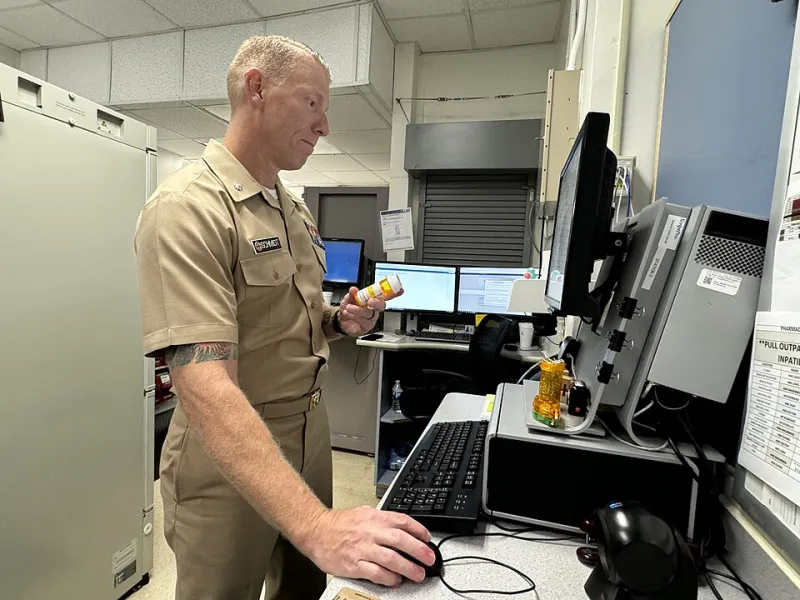
Photo: U.S. Navy NMRTC by Emily McCamy, Public domain, via Wikimedia Commons
You drop off a prescription, glance at the waiting area, and settle in. Ten minutes pass. Then twenty. Then forty-five. The pharmacist hasn't looked up, the technician is typing furiously, and the line behind you is growing. From where you're standing, it can feel like nothing is happening at all.
In reality, the opposite is true.
The gap between handing over a script and hearing your name called is filled with a layered sequence of clinical, administrative, and logistical steps that happen largely out of view. Understanding what those steps are — and why any one of them can stall the entire process — won't necessarily make the wait shorter, but it will make it considerably less mysterious.
Step One: The Script Enters a Queue, Not a Vacuum
When a prescription is received — whether physically handed over or transmitted electronically from a prescriber's office — it doesn't move immediately to a pharmacist's hands. It enters a workflow queue, often shared across multiple staff members managing dozens of prescriptions simultaneously.
Most modern pharmacies operate on digital dispensing systems that log, prioritize, and route each order. A prescription flagged as a new medication for a patient with a complex drug profile may be routed differently than a routine refill. Urgent prescriptions — those for antibiotics or acute-care medications — may be triaged ahead of maintenance medications. What feels like your prescription sitting untouched is often your prescription sitting in a line managed by an algorithm and adjusted by human judgment.
Step Two: Insurance Adjudication Can Halt Everything
For insured patients, one of the most time-consuming and least visible steps is insurance adjudication — the electronic process by which the pharmacy submits a claim to your insurer and waits for approval, rejection, or a request for additional information.
This exchange happens in real time, but "real time" in insurance terms doesn't mean instant. A claim may return with a rejection code indicating the medication requires prior authorization — a formal approval from your prescriber before the insurer will agree to cover it. Prior authorization, or PA, is among the most significant sources of delay in the entire dispensing process. The pharmacy must contact the prescriber's office, the prescriber must submit documentation to the insurer, and the insurer must render a decision. That chain of communication rarely resolves within a single visit.
Other common rejection codes include quantity limits (your prescription exceeds what the plan allows per fill), step therapy requirements (the insurer wants evidence that a less expensive alternative was tried first), or formulary exclusions (the medication simply isn't covered under your current plan). Each of these requires a different resolution pathway, and none of them can be bypassed by a pharmacist acting alone.
Step Three: Drug Utilization Review Is Not Optional
Before any medication is dispensed, pharmacists are required by law and professional standards to conduct a drug utilization review, commonly referred to as DUR. This is a clinical check — not a formality — that examines your current medication profile for potential interactions, duplicate therapies, contraindicated combinations, and dosing concerns.
If your profile includes ten other medications, that review takes longer than if it includes two. If the prescribing physician has written a dosage that falls outside standard parameters, the pharmacist must either verify intent directly with the prescriber or flag the order for closer scrutiny. These calls take time. Hold times at busy medical offices can stretch to fifteen or twenty minutes on their own.
This is the step patients are least likely to know exists and most likely to benefit from. A pharmacist who catches a dangerous interaction during DUR — before the medication ever reaches your hands — is performing one of the most consequential acts in all of outpatient healthcare. It deserves the time it takes.
Step Four: Physical Dispensing Is Only Part of the Work
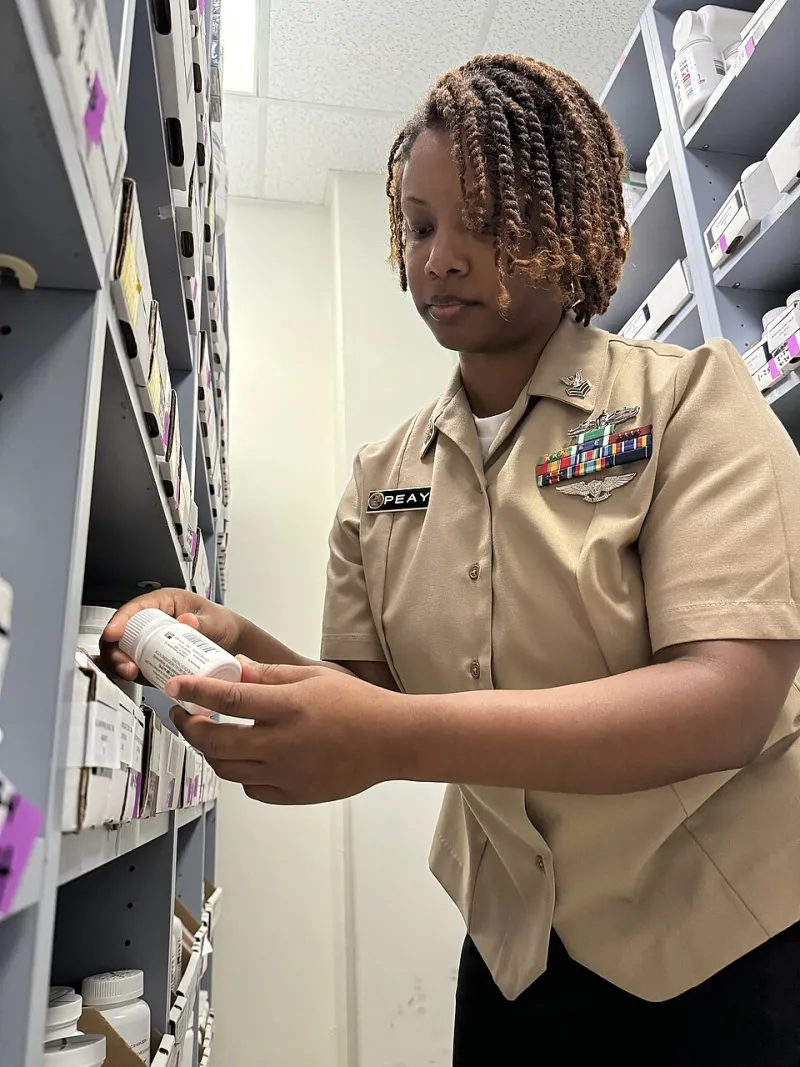
Once a prescription clears the clinical and administrative checkpoints, a technician physically retrieves, counts, labels, and packages the medication. Even this step carries more complexity than it appears. Medications must be verified against the original order for name, strength, and formulation. Labels must be generated with accurate patient instructions. Some medications require special handling — refrigeration, unit-of-use packaging, or auxiliary labels for photosensitivity or food interactions.
The filled prescription then moves to a final pharmacist verification — a second clinical review of the completed product before it's released. This check is not redundant. It is a deliberate safeguard designed to catch errors introduced during the dispensing process itself, including wrong strength, wrong quantity, or mislabeling.
Step Five: Staffing Realities Shape Every Timeline
All of the above happens within a staffing environment that, across the U.S., has grown increasingly strained. Pharmacy staff shortages have been well-documented in recent years, with many retail pharmacies operating below their intended capacity. A workflow designed to be managed by four people, when staffed by two, takes longer — not because anyone is moving slowly, but because each person is absorbing a larger share of a complex, multi-step process.
High prescription volume, particularly during cold and flu season or following a community health event, compounds these pressures. The forty-five-minute wait you experience in January may be twenty minutes in July — not because the process changed, but because the volume did.
What You Can Do to Reduce Your Own Wait
Understanding the workflow also reveals where patient behavior can genuinely help. A few practical considerations:
- Call ahead or use digital tools. Most pharmacies allow prescriptions to be queued in advance via app or phone. Arriving after the processing window has already begun shortens your in-store wait considerably.
- Confirm insurance before your visit. If your coverage has changed recently, notifying the pharmacy in advance prevents adjudication delays from surfacing at the counter.
- Ask about your prescription's status at drop-off. If you need the medication urgently, say so. Pharmacies can often prioritize accordingly.
- Request text or app notifications. Most major pharmacy systems will alert you when your prescription is ready, eliminating the need to wait on-site.
- Build in lead time for new prescriptions. If a medication is new to you, it's more likely to trigger a DUR flag, a prior authorization request, or a formulary check. Dropping off the day before you need it creates room for those processes to resolve.
The Wait Is the Work
The frustration of a long pharmacy wait is understandable. But what happens behind the counter during that time is not inefficiency — it is a structured, multi-layered process designed to ensure that what you receive is safe, accurate, covered, and appropriate for your specific health profile.
The next time your name takes longer than expected to be called, know that the wait is not a pause in the work. In most cases, it is the work itself.