Not All Generics Are Created Equal: What's Really Happening When Your Medication Stops Working
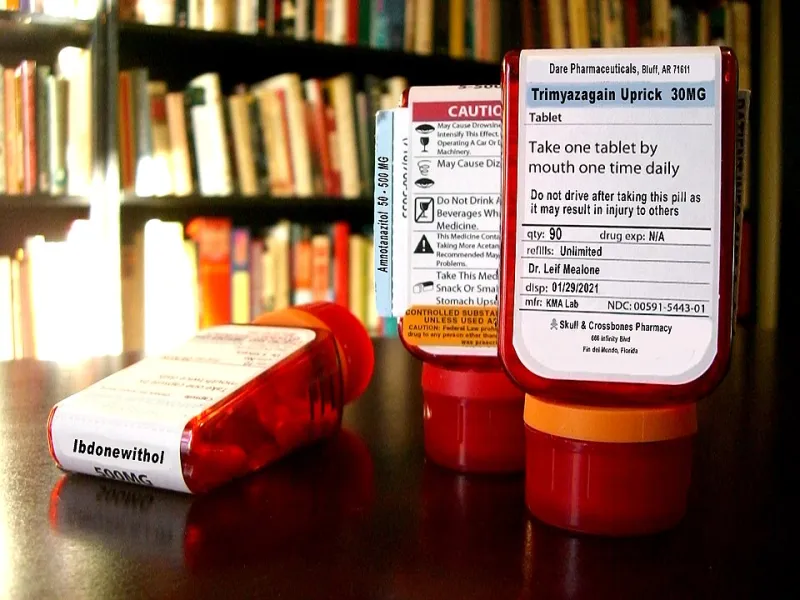
Photo: Betty Wills (Atsme on Wikipedia), CC BY 2.0, via Wikimedia Commons
You've been taking the same generic blood pressure medication for two years without incident. Then your pharmacy switches suppliers, and within weeks you notice your readings creeping upward. Your doctor adjusts your dose. The problem, it turns out, may not be your blood pressure at all — it may be your pill.
This scenario is more common than most people realize, and it points to a quietly important truth about the American generic drug market: chemical equivalence does not always translate to clinical equivalence.
The FDA's Definition of "Equivalent" Has Built-In Flexibility
The U.S. Food and Drug Administration requires that generic medications demonstrate bioequivalence to their brand-name counterparts. In practical terms, this means the generic must deliver between 80 and 125 percent of the active ingredient's bioavailability — the rate and extent to which it is absorbed into the bloodstream — compared to the original product.
That range is scientifically justified and generally appropriate for most patients. However, it also means that two generics from two different manufacturers, both fully FDA-approved, could theoretically sit at opposite ends of that window. For the majority of medications, this variation is clinically insignificant. For certain narrow therapeutic index drugs — medications where a small change in blood concentration can meaningfully alter outcomes — it may not be.
Medications used to manage thyroid conditions, epilepsy, blood clotting disorders, and some psychiatric conditions fall into this sensitive category. Patients relying on these drugs are particularly vulnerable to the subtle differences that can exist between generic formulations from different manufacturers.
Why Pharmacies Source from Different Manufacturers
Here is where the retail pharmacy landscape introduces another layer of complexity. Unlike brand-name drugs, which are produced by a single manufacturer, generic medications may be made by dozens of different companies. A national chain pharmacy, a regional independent, and an online mail-order pharmacy may each source the same generic from entirely different suppliers — and those suppliers may change from month to month based on contract pricing, inventory availability, and supply chain dynamics.
This means that when you refill your prescription at a different pharmacy, or even at the same pharmacy after a supplier switch, you may be receiving a product manufactured under different conditions, with different inactive ingredients, and potentially with different absorption characteristics.
Inactive ingredients — the binders, fillers, coatings, and dyes that make up the bulk of most tablets — are not inert bystanders. They influence how quickly a tablet dissolves, how the active ingredient is released, and how effectively it is absorbed. Two tablets containing identical amounts of the same active compound can behave differently in the body if their inactive ingredient profiles differ substantially.
Storage Conditions: The Variable Nobody Talks About
Manufacturing quality is only part of the equation. How medications are stored — from the moment they leave the factory to the moment they reach your medicine cabinet — can affect their stability and potency.
Temperature fluctuations, humidity exposure, and improper handling during shipping or warehousing can degrade some medications faster than others. A pharmacy that maintains rigorous climate-controlled storage and rapid inventory turnover presents a meaningfully different environment than one operating with less attention to these details.
This is not to suggest that most pharmacies are negligent — the vast majority operate well within regulatory standards. But standards define a floor, not a ceiling. Consumer-facing pharmacies vary in the care they take beyond minimum compliance, and those differences can matter for sensitive medications.
What You Can Actually Do About It
Armed with this information, there are practical steps you can take to reduce the variability in your medication supply.
Ask your pharmacist which manufacturer produced your current supply. Most pharmacists can tell you the name of the manufacturer, and many will note it in your file so you receive the same product on future refills. If a manufacturer switch occurs, ask to be notified.
Request consistency when refilling. If a particular generic formulation has worked well for you, let your pharmacist know. Many independent pharmacies, and some chain pharmacies, will make an effort to source from the same supplier when possible.
Talk to your prescriber about narrow therapeutic index concerns. If you take a medication where precise blood levels matter — thyroid hormone replacement, anticoagulants, certain antiepileptics — your physician may be able to note a preferred manufacturer on your prescription, or in some cases, recommend remaining on a brand-name product if generic variability has been a documented problem for you.
Keep a symptom log when switching pharmacies. If you notice changes in how you feel — increased side effects, reduced effectiveness, new symptoms — shortly after a refill from a new source, document it and bring it to your pharmacist's and physician's attention. This kind of patient-reported data is genuinely useful.
Consider mail-order pharmacy programs with transparent sourcing. Some mail-order and specialty pharmacy programs provide greater consistency in manufacturer selection due to their larger-volume contracts. Ask whether your insurer's pharmacy benefit manager offers such a program.
The Bigger Picture: An Informed Patient Is a Better-Protected One
The generic drug system in the United States has delivered enormous value — reducing costs, expanding access, and enabling millions of Americans to maintain treatment regimens they could not otherwise afford. None of the complexity described above should be read as an indictment of generic medications broadly. The overwhelming majority of patients do well on generics, and the cost savings are real and significant.
But the system is not without its nuances, and those nuances disproportionately affect patients managing complex, chronic, or sensitive conditions. Understanding that your pharmacy's sourcing decisions, storage practices, and supplier relationships can influence what ends up in your prescription bottle — and knowing what questions to ask — puts you in a stronger position to advocate for your own care.
At UPharm U, our commitment is to ensure that every consumer has access to the kind of information that was once available only to those with deep connections to the healthcare system. Generic medications are a cornerstone of affordable care in America. Knowing how they work — and where the variables lie — is simply part of using them wisely.