The Person Behind the Counter: Understanding What Pharmacy Technicians Know, and Where Their Expertise Ends

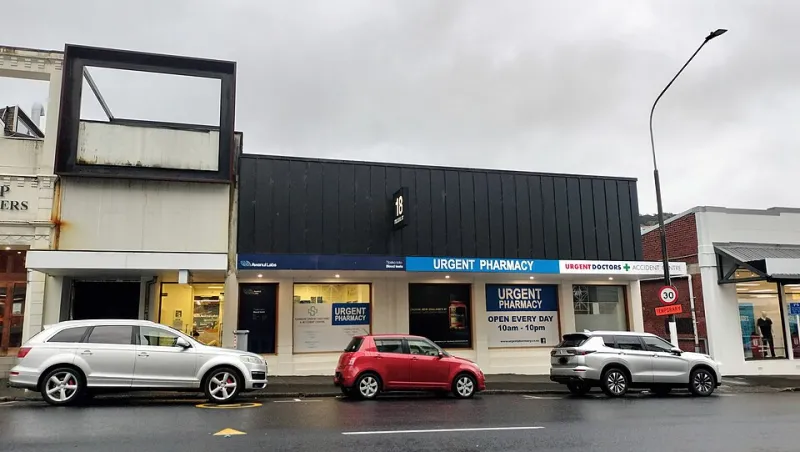
Photo: Will Weaver, CC BY-SA 2.0, via Wikimedia Commons
Walk into almost any retail pharmacy in the United States and you will likely be greeted not by a pharmacist, but by a pharmacy technician. They process your prescription, confirm your insurance information, handle the transaction, and occasionally field questions about your medication. They are, for most customers, the primary human point of contact during what can be a confusing or even anxious errand.
And yet, for all their visibility, pharmacy technicians remain one of the least understood members of the healthcare workforce. Patients are often unsure whether to trust their answers, whether to push for the pharmacist instead, or whether the distinction even matters. It does — and understanding it can meaningfully improve your experience at the pharmacy counter.
What Formal Training Actually Looks Like
Pharmacy technician requirements vary by state, but the profession has moved steadily toward standardization over the past decade. Most states now require technicians to complete an accredited training program, pass a national certification exam — typically the Pharmacy Technician Certification Exam (PTCE) administered by the Pharmacy Technician Certification Board, or the ExCPT offered through the National Healthcareer Association — and complete continuing education to maintain their credentials.
Accredited programs cover a substantial amount of ground. Coursework generally includes pharmaceutical terminology, medication dosage forms, basic pharmacology, drug classifications, pharmacy law and ethics, prescription processing, compounding fundamentals, and insurance billing. Many programs also include a supervised externship component, giving students hands-on experience in an actual pharmacy setting before they enter the workforce independently.
This is not a superficial credential. A certified pharmacy technician has demonstrated genuine working knowledge of how medications are categorized, dispensed, and processed. What the training does not confer, however, is the clinical depth that a licensed pharmacist acquires through a Doctor of Pharmacy (PharmD) degree — a four-year professional program that follows undergraduate education and includes extensive clinical rotations.
The Questions They Can Answer Reliably
Within their defined scope, pharmacy technicians are quite capable. When you arrive at the counter with a straightforward need, a technician is well-equipped to assist.
They can accurately confirm whether your prescription is ready, explain the general process for refill requests, and clarify what your insurance plan covered and what it did not. They understand how to read a prescription label and can walk you through the basic instructions printed on it — dosage frequency, whether to take the medication with food, and standard storage guidance.
Technicians are also knowledgeable about medication forms. If you ask whether a particular drug is available as a liquid instead of a tablet, or whether a generic equivalent exists for a brand-name product, a technician can typically answer that question accurately and quickly. They handle these logistics constantly.
On the operational side, technicians are often your best resource. Questions about prior authorization timelines, mail-order pharmacy options, how to transfer a prescription from another location, or what documentation your insurance requires — these fall squarely within their daily responsibilities.
Where the Boundaries Become Important
The distinction between a technician and a pharmacist is not about intelligence or effort. It is about the scope of clinical training and the legal authority that flows from licensure.
Pharmacists are licensed clinicians. They have the training to evaluate drug interactions, assess whether a prescribed dose is appropriate for a patient's specific health profile, counsel patients on managing side effects, and make professional judgments about therapeutic alternatives. These are not tasks that technicians are trained or legally permitted to perform independently.
If you are asking whether a medication you have been prescribed could interact with a supplement you are taking, that question belongs with the pharmacist. If you are concerned that a new prescription seems to conflict with an existing one, the pharmacist needs to hear that. Questions about whether a side effect you are experiencing is expected or cause for concern, whether it is safe to split a particular tablet, or whether a dose adjustment might be warranted — all of these require pharmacist involvement.
A well-trained technician should recognize these boundaries and refer you appropriately rather than speculate. If a technician at any pharmacy attempts to provide clinical guidance that exceeds their scope, that is worth noting — and worth redirecting.
The Staffing Reality That Shapes Your Experience
It is worth acknowledging the environment in which pharmacy technicians operate. Retail pharmacies are frequently understaffed relative to demand. Technicians often manage high prescription volumes, fielding questions from multiple patients simultaneously while processing insurance claims and handling phone calls.
This context does not excuse a failure to refer clinical questions appropriately, but it does explain why interactions at the counter can sometimes feel rushed. If you have a question that requires the pharmacist's attention and the technician seems uncertain, it is entirely appropriate to ask directly: "Could I speak with the pharmacist about this?" A competent technician will not be offended by that request. In fact, facilitating that handoff is part of their professional responsibility.
Many pharmacies also offer private consultation windows or designated spaces where you can speak with the pharmacist without conducting the conversation across a busy counter. If such a space is available and your question is substantive, use it.
Getting More From Every Pharmacy Visit
Knowing the division of labor at your pharmacy can make your visits more efficient. Arrive with a clear sense of what you need to accomplish. Logistical tasks — picking up a prescription, asking about refill eligibility, understanding a billing charge — are well within a technician's wheelhouse. Clinical questions, concerns about your health, and anything involving judgment about your medication regimen are appropriate for the pharmacist.
Come prepared. If you are asking about potential interactions, bring a list of everything you currently take, including over-the-counter products and supplements. If you are concerned about a side effect, be specific about when it started and how it manifests. The more precise your question, the more useful the answer — regardless of who is providing it.
And if you use a pharmacy with an online or telephone consultation option, consider using it for non-urgent clinical questions during slower hours. Pharmacists are often more available to engage thoroughly when the counter is not at peak volume.
A Profession Worth Understanding
Pharmacy technicians are trained, certified professionals who perform essential work within a carefully defined scope. They are not pharmacists, and they are not intended to be. The system functions best when each role operates within its appropriate boundaries — and when patients understand those boundaries well enough to navigate them.
At UPharm U, we believe that informed patients make better health decisions. Part of that means understanding not just the medications you take, but the people and processes involved in getting those medications to you safely. The technician behind the counter is a skilled professional with real knowledge to offer. Knowing what that knowledge covers — and what it does not — puts you in a stronger position every time you visit the pharmacy.