Empty Shelves, Unanswered Questions: What's Really Behind Medication Shortages and How to Protect Yourself
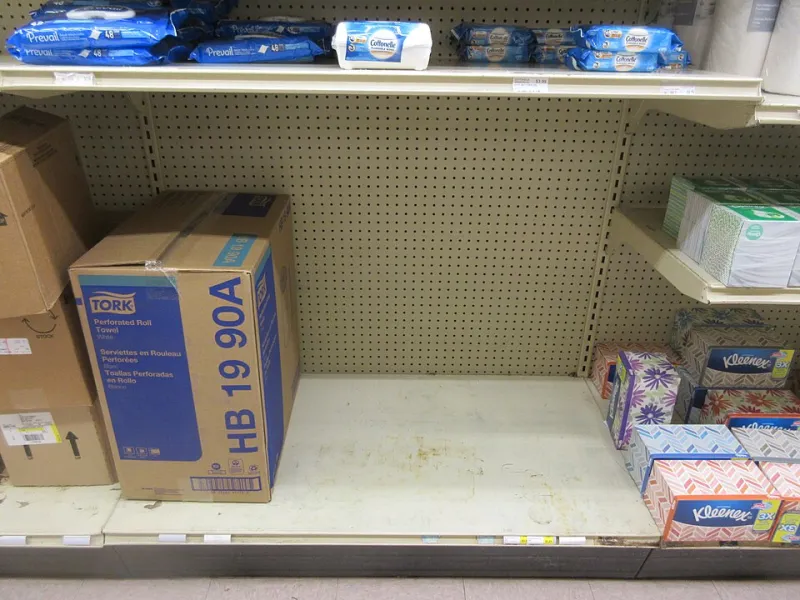
Photo: Infrogmation of New Orleans, CC BY-SA 4.0, via Wikimedia Commons
You arrive at the pharmacy counter with a refill request you've submitted a dozen times before. The pharmacist pauses, types something, and then delivers the news: your medication is out of stock. No clear timeline. No obvious alternative. Just a quiet disruption in a routine you've come to rely on.
Drug shortages in the United States are not rare events. According to the American Society of Health-System Pharmacists (ASHP), hundreds of medications are in shortage at any given time—ranging from injectable cancer drugs to common antibiotics to medications for attention and mood disorders. What's less understood is why these shortages happen, how long they typically last, and what options exist for patients caught in the middle.
The Supply Chain Is More Fragile Than It Appears
Most Americans assume that because a medication has been available for years, its supply is stable. In reality, the pharmaceutical supply chain is a tightly interlocked system with very little redundancy. A disruption at any single point—a raw ingredient supplier, a contract manufacturer, a quality control failure—can ripple outward quickly.
The majority of active pharmaceutical ingredients (APIs) used in U.S. medications are manufactured overseas, with a significant concentration in India and China. This geographic consolidation means that a single factory shutdown, a monsoon season disrupting logistics, or a regulatory action in another country can affect drug availability for American patients within weeks.
Domestically, many medications—particularly older generics—are produced by only one or two manufacturers. When a facility fails a U.S. Food and Drug Administration (FDA) inspection, or when contamination is discovered during production, the FDA may issue a warning letter or mandate a recall. If no other domestic manufacturer has the capacity to absorb that volume, a shortage follows almost immediately.
Why Shortages Often Hit Without Warning
The FDA does maintain a public database of current drug shortages, updated regularly. However, the gap between when a shortage begins at the manufacturing level and when patients feel it at the pharmacy counter can be surprisingly short—often just a matter of days.
Pharmacies typically operate on lean inventory models, ordering stock on a just-in-time basis rather than maintaining large reserves. This keeps costs manageable but leaves little buffer when upstream supply falters. Wholesalers, who act as the intermediary between manufacturers and pharmacies, may begin rationing available supply before any public announcement is made, meaning individual pharmacies receive less product without necessarily understanding why.
For patients, this often translates into a confusing experience: one pharmacy is out of stock, another has a partial supply, and a third may have received a full shipment. This inconsistency is not accidental—it reflects how rationing decisions ripple unevenly through a decentralized distribution network.
The Role of FDA Oversight in Shortage Timelines
The FDA plays a dual role in drug shortages: it is both a cause and a potential solution. When the agency identifies manufacturing deficiencies—sterility failures, contamination with foreign particles, documentation irregularities—it is legally required to act, even when doing so reduces available supply.
Once a shortage is identified, the FDA has authority to expedite review of new manufacturers, allow temporary importation of foreign-approved equivalents, and work with existing manufacturers to accelerate production. These interventions can shorten shortage duration, but regulatory processes are rarely fast. A new manufacturer seeking FDA approval to produce a drug typically faces a review timeline measured in months, not weeks.
The FDA's drug shortage database (accessible at fda.gov) provides current status information, including whether a shortage is ongoing, resolved, or in the process of being addressed. Checking this resource directly is more reliable than relying on secondhand information from social media or general news coverage.
Practical Steps When Your Medication Is Unavailable
Facing a shortage is stressful, but there are concrete actions that can meaningfully improve your situation.
Contact multiple pharmacies directly. Because distribution is uneven, calling several pharmacies in your area—including independent pharmacies, which sometimes receive allocations differently than large chain locations—may reveal available stock that isn't visible through a single call.
Ask your pharmacist about therapeutic alternatives. For many drug classes, your pharmacist can consult with your prescribing physician to identify a clinically appropriate substitute. This is not a decision to make independently, but it is a conversation worth initiating. Your pharmacist is well-positioned to explain the differences between the unavailable medication and potential alternatives.
Request a larger supply when it becomes available. If your medication is experiencing recurring shortages, ask your prescriber whether a 90-day supply (where permitted by your insurance plan) is feasible. Some states and insurance plans restrict supply quantities, but it is worth confirming what your coverage allows.
Document everything. Keep a written record of which pharmacies you contacted, what you were told, and when. If you need to escalate to your insurance company, your prescriber, or a patient advocacy organization, this documentation will support your case.
Check manufacturer patient assistance programs. Some brand-name manufacturers maintain direct supply programs for patients who cannot access their medication through conventional channels. These are typically income-based but worth investigating if you are managing a critical medication.
When to Escalate the Conversation
If a shortage is affecting a medication that manages a serious or unstable condition—seizures, psychiatric illness, cardiovascular disease—do not wait passively for supply to return. Contact your prescribing physician promptly and explain the situation. Physicians are often unaware of real-time pharmacy shortages and may have access to samples, hospital formulary alternatives, or specialist contacts that can bridge the gap.
Your state board of pharmacy may also have resources or guidance specific to your state's shortage situation. Some states have enacted emergency dispensing rules that allow pharmacists to provide a limited emergency supply of a medication when a refill cannot be fulfilled due to shortage.
How Long Do Shortages Actually Last?
This is the question patients most want answered, and it is also the most difficult to answer precisely. Shortage duration varies enormously depending on cause. A temporary manufacturing disruption may resolve in weeks. A facility shutdown requiring FDA remediation can extend a shortage for six months or longer. Shortages involving drugs with few manufacturers and complex production requirements have historically lasted more than a year.
The ASHP and FDA databases provide the most current status information available to the public. While neither source can offer a firm resolution date, they do indicate whether a shortage is actively being addressed and whether new supply is anticipated.
A More Informed Patient Is a Better-Protected One
Drug shortages will not disappear anytime soon. The structural vulnerabilities in pharmaceutical manufacturing and distribution are widely acknowledged, and while regulatory and legislative efforts to address them are ongoing, meaningful change takes time. In the interim, the most effective protection available to individual patients is knowledge—understanding why shortages happen, where to find accurate information, and how to advocate clearly within the healthcare system.
When your medication is unavailable, the situation is genuinely difficult. But it is not without options. The more clearly you understand the landscape, the more effectively you can navigate it.