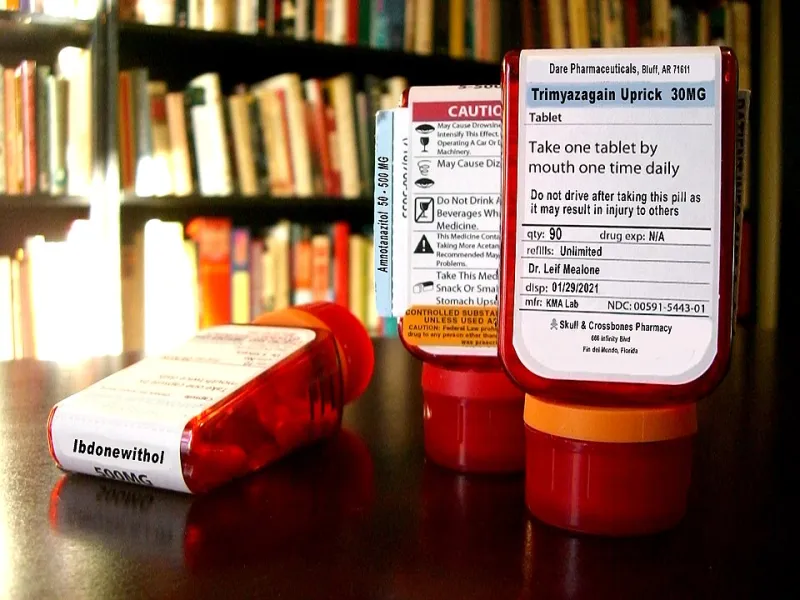
The Pharmacist Who Knew First: How the Dispensing Counter Became an Unlikely Frontline of Patient Safety
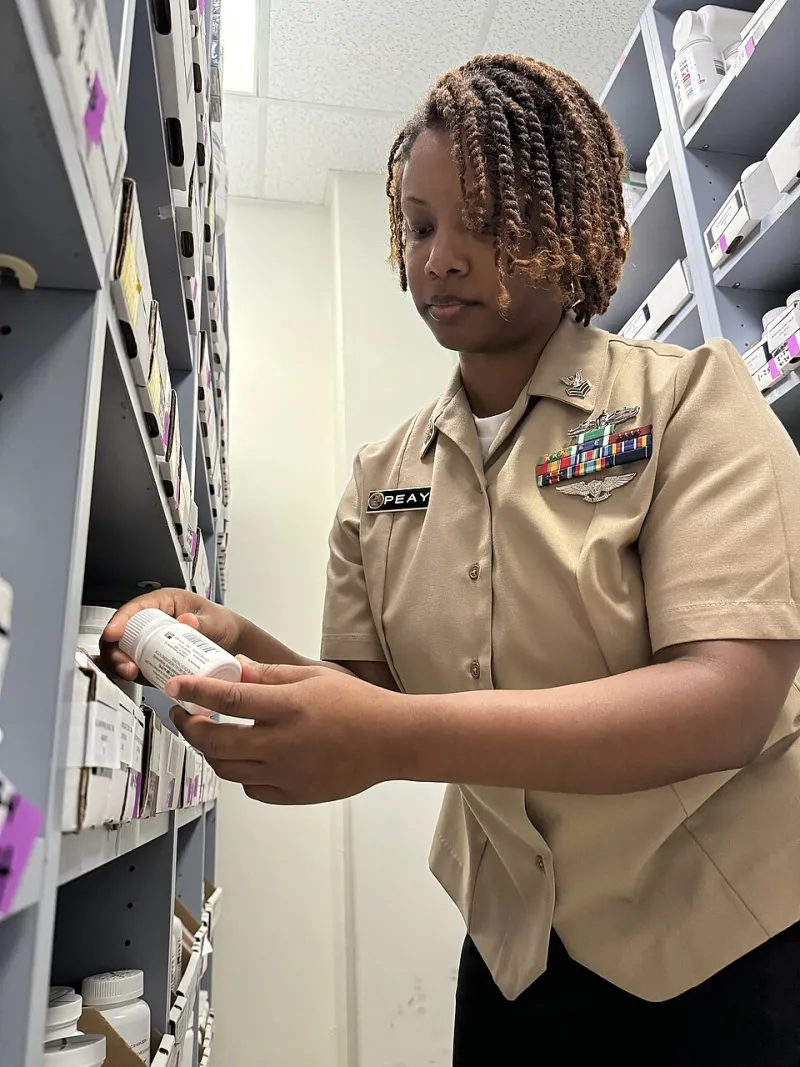
Photo: U.S. Navy NMRTC by Emily McCamy, Public domain, via Wikimedia Commons
Most Americans think of their pharmacist as the person who fills prescriptions and answers questions about dosing schedules. That perception, while not inaccurate, captures only a fraction of what happens behind the dispensing counter. In ways that are rarely discussed and almost never celebrated, pharmacists occupy a uniquely informed position in the U.S. healthcare system — one that routinely places them closer to a complete picture of a patient's health than any individual physician in that patient's care network.
Understanding how that position works, and why it matters, requires a closer look at the information pharmacists actually have access to — and what they do with it.
A Single Vantage Point Across a Fragmented System
The American healthcare landscape is notoriously siloed. A cardiologist managing a patient's heart failure may have no visibility into what a rheumatologist prescribed last month. A primary care physician conducting an annual wellness visit may be entirely unaware that a patient has been purchasing high-dose ibuprofen weekly from a nearby drugstore. Electronic health records have improved connectivity in some health systems, but gaps remain widespread, particularly for patients who see specialists across different networks or who self-manage with over-the-counter products and dietary supplements.
The pharmacy sits at a crossroads that most clinical settings do not. When a patient fills prescriptions from multiple providers at a single pharmacy — or even across pharmacies within the same chain — a pharmacist reviewing that profile can observe the cumulative picture: every active medication, recent refill patterns, documented allergies, and in many retail settings, OTC purchases made at the same location. That aggregated view is not incidental. It is, in practice, one of the most comprehensive health snapshots available outside of a hospital setting.
When the Profile Tells a Story No One Else Is Reading
Consider a common scenario: an older adult is prescribed a blood thinner by a cardiologist, a muscle relaxant by an orthopedic specialist following a procedure, and a sleep aid by a primary care physician managing complaints of insomnia. Each prescription, reviewed in isolation, may appear entirely appropriate. Reviewed together, the combination can present a serious bleeding risk, a fall hazard, or a cascade of central nervous system effects that none of the prescribing physicians fully anticipated because none of them had access to the others' orders at the time of prescribing.
A pharmacist filling all three prescriptions, however, sees them simultaneously. Trained specifically in pharmacokinetics — the study of how drugs move through the body — and drug-drug interactions, a pharmacist is positioned to flag that combination before the patient ever opens the first bottle.
This is not a hypothetical. Pharmacy intervention studies published in peer-reviewed literature have documented cases where dispensing-level reviews caught contraindications that slipped through prescribing workflows. In one category of documented events, pharmacists identified that patients were simultaneously taking medications that, combined, dramatically increased the risk of QT prolongation — a cardiac rhythm abnormality that can be fatal. In others, pharmacists noticed that a newly prescribed antibiotic was contraindicated with an existing medication the patient had been taking for years.
The Supplement and OTC Blind Spot
Beyond prescription medications, pharmacists are often the only healthcare professional with visibility into a patient's supplement and over-the-counter regimen. Physicians frequently ask patients about supplements during intake, but studies consistently show that patients underreport these products — sometimes because they do not consider them "real" medications, and sometimes because they forget to mention them in the clinical moment.
At the pharmacy level, the conversation happens differently. A patient picking up a prescription while also selecting a St. John's Wort supplement from the adjacent shelf may not realize that the combination with their antidepressant carries a risk of serotonin syndrome. A pharmacist who observes or is consulted about that purchase has both the training and the opportunity to intervene in a way a physician — who may not know about the supplement at all — simply cannot.
Similarly, patients who regularly purchase high quantities of certain OTC pain relievers, antacids, or antihistamines may be managing symptoms that warrant clinical evaluation. A pharmacist who notices those purchase patterns over time is positioned to ask questions that could surface an undiagnosed condition or a medication side effect that has gone unaddressed.
Why This Safety Role Remains Largely Invisible
Despite the scope of what pharmacists observe, their safety function remains underrecognized by both patients and, in some cases, the broader healthcare system. Several structural factors contribute to this.
First, pharmacist-to-patient ratios at high-volume retail pharmacies can make proactive consultation difficult to sustain consistently. When a pharmacy is processing hundreds of prescriptions per shift, the time available for individualized review and patient conversation is compressed.
Second, pharmacists are not always integrated into the communication loops that connect a patient's care team. Physician-to-physician referral networks and shared electronic health record access often exclude the dispensing pharmacist, meaning that even when a pharmacist flags a concern, the pathway for communicating that concern back to prescribers can be informal, delayed, or inconsistent.
Third, patients themselves rarely think to consult their pharmacist proactively. The cultural default in the U.S. is to bring health questions to a physician, with the pharmacy functioning as a fulfillment service rather than a clinical resource. That framing, while understandable, leaves a substantial safety asset underutilized.
What Patients Can Do to Activate This Resource
For patients who want to take advantage of what their pharmacist actually knows, a few practical steps can make a meaningful difference.
Consolidate your prescriptions. Filling all medications at a single pharmacy — or at minimum, within a single pharmacy chain — gives your pharmacist the most complete view of your medication profile. Splitting prescriptions across multiple unconnected pharmacies fragments that picture and reduces the likelihood that interactions will be caught.
Disclose supplements and OTC medications. When picking up a prescription or speaking with a pharmacist, mention any vitamins, herbal supplements, or over-the-counter medications you take regularly. Even products that seem benign can interact with prescription drugs in clinically significant ways.
Request a medication review. Many pharmacies offer formal medication therapy management consultations, sometimes covered by Medicare Part D and certain private insurance plans. These structured reviews are specifically designed to identify interaction risks, redundancies, and gaps in a patient's overall regimen.
Ask questions at pickup. The brief exchange at the dispensing counter is an underused opportunity. Asking whether a new medication interacts with anything you are already taking takes seconds and can prompt a review that might otherwise not occur.
A Safety Layer Worth Recognizing
The pharmacy is not a backup system. It is, in the architecture of American healthcare, a distinct and often undervalued safety layer — one staffed by clinicians whose training is specifically oriented toward the pharmacological complexity that emerges when multiple medications, supplements, and health conditions intersect.
The physician who prescribes a medication sees one piece of the picture. The pharmacist who dispenses it may be looking at all of them at once. For patients navigating a fragmented healthcare system, that distinction is worth understanding — and worth acting on.