The Medicine Cabinet Time Capsule: What Those Expired Medications Are Actually Doing to Your Health, Your Wallet, and Your Watershed
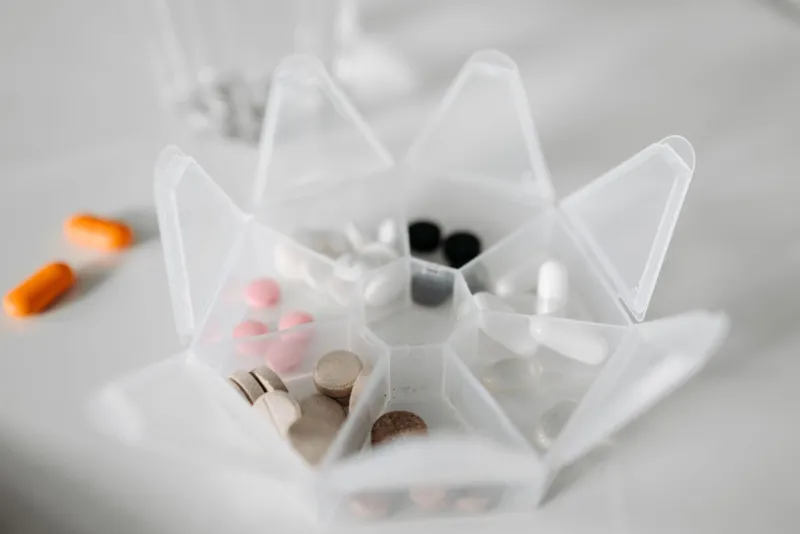
Open the average American medicine cabinet and you are likely to encounter a small archaeological site: a half-used antibiotic from three winters ago, an anxiety medication prescribed during a difficult year, a blood pressure drug from a regimen that was later adjusted, and three varieties of ibuprofen in varying states of completeness. According to survey data from the U.S. Food and Drug Administration, a significant majority of American households hold onto medications well past their labeled expiration dates — often without giving the matter much thought.
This is not a trivial habit. The accumulation of expired medications at home raises questions that span clinical safety, environmental responsibility, and household financial management. Understanding what expiration dates actually mean, why people tend to hold onto old prescriptions, and what responsible disposal looks like in practice is the kind of foundational consumer knowledge that rarely gets discussed as plainly as it deserves.
What an Expiration Date Is — and What It Is Not
The expiration date printed on a medication's packaging is not, as many people assume, the moment at which a drug transforms from safe to dangerous. It is more accurately described as the manufacturer's guarantee: a date through which the product has been tested and confirmed to retain at least 90 percent of its labeled potency under recommended storage conditions.
Beyond that date, the manufacturer's guarantee simply ends. What actually happens to the medication depends heavily on the specific compound, its formulation, and how it has been stored.
Some medications degrade gradually and predictably. Liquid antibiotics, for instance, break down relatively quickly after mixing and have a short shelf life for a reason. Nitroglycerin tablets are notoriously sensitive to heat, moisture, and light, meaning they may lose effectiveness well before their printed date if stored improperly. Insulin and certain biologics require strict temperature control and should never be used past expiration.
Other medications are considerably more stable. A well-known study conducted by the U.S. military — which had strong logistical incentives to extend the usable life of stockpiled drugs — found that many solid oral medications retained their potency years, and in some cases decades, beyond their labeled expiration dates. Aspirin, certain antihistamines, and some pain relievers fall into this category.
The critical nuance here is that a consumer cannot reliably determine which category any given medication falls into without laboratory testing. Visual inspection is not sufficient. A pill that looks identical to the day it was dispensed may have undergone chemical changes that are invisible to the eye. This uncertainty is precisely why healthcare providers and pharmacists consistently recommend against using expired medications for any condition requiring reliable, consistent dosing — particularly for chronic conditions, infections, or anything affecting cardiac or neurological function.
Why the Medicine Cabinet Fills Up in the First Place
Understanding why expired medications accumulate requires acknowledging the structural and behavioral factors at play. Prescriptions are frequently written for quantities that exceed what a patient ultimately uses. A ten-day antibiotic course may be abandoned after symptoms resolve on day six. A pain management prescription written after surgery may go largely untouched if recovery proceeds more smoothly than anticipated.
There is also a deeply human tendency to retain medications as a form of preparedness. Many patients reason, consciously or not, that keeping an old prescription provides a safety net — something to reach for if a similar problem arises before a doctor's appointment becomes available. In communities with limited healthcare access or high out-of-pocket costs, this logic is not entirely without foundation, even if the practice carries its own risks.
Financially, discarding medications that cost a significant amount to obtain feels wasteful. A specialty medication that required a prior authorization battle and a substantial copay is not something most patients feel comfortable throwing in the trash. This hesitation is understandable, but it should not become a reason to self-medicate with outdated drugs.
The Environmental Dimension Most People Miss
Flushing medications down the toilet or rinsing them down the sink was, for many years, the standard disposal advice. It is now understood to be environmentally problematic. Wastewater treatment systems in the United States are not designed to remove pharmaceutical compounds, and studies have consistently detected measurable concentrations of prescription drugs — including hormones, antidepressants, and antibiotics — in rivers, streams, and municipal water supplies.
The ecological consequences of pharmaceutical contamination in waterways include disrupted reproductive cycles in fish populations, the potential acceleration of antibiotic resistance in aquatic environments, and downstream effects that researchers are still working to fully characterize. Throwing medications directly into household trash creates a different but related set of concerns, including the risk of accidental ingestion by children or pets and the possibility of drug diversion.
The FDA does maintain a short list of medications — primarily high-risk opioids and certain controlled substances — for which flushing remains the recommended disposal method when no other option is available. The reasoning is that the immediate risk of these drugs reaching the wrong hands outweighs the environmental cost. For the vast majority of medications, however, dedicated disposal programs are the clearly preferred route.
Disposal Options That Actually Work
The good news is that responsible medication disposal has become substantially more accessible over the past decade, driven in large part by the Drug Enforcement Administration's National Prescription Drug Take Back Initiative and the expansion of year-round drop-off infrastructure.
DEA-authorized collection sites are now located in thousands of communities across the country, typically housed within pharmacies, hospitals, and law enforcement facilities. These sites accept most prescription and over-the-counter medications, including controlled substances, at no cost to the consumer. The DEA's website maintains a searchable locator tool that allows users to find the nearest authorized site by zip code.
Mail-back programs have emerged as a particularly practical option for individuals with limited mobility, those in rural areas, or anyone who simply finds it difficult to make a dedicated trip. Several pharmacy chains and independent services offer prepaid envelopes specifically designed for medication disposal. Some state and county health departments also distribute these envelopes free of charge.
Medication disposal pouches, available at many pharmacies, use activated charcoal or similar compounds to render drugs inert before disposal in standard household trash. These represent a reasonable middle-ground option when drop-off or mail-back is genuinely not feasible.
For anyone uncertain about the options available in their specific area, a pharmacist is well-positioned to provide current, localized guidance. This is precisely the kind of practical consumer question that a pharmacy team can answer quickly and without an appointment.
Making It a Habit Rather Than an Event
The most effective approach to expired medication accumulation is not a periodic purge but an ongoing practice. Setting a reminder to review the medicine cabinet twice a year — perhaps aligned with the twice-yearly clock changes — provides a consistent opportunity to identify and dispose of outdated products before they become a genuine concern.
Keeping a brief inventory of current medications, their purposes, and their expiration dates requires minimal effort and pays dividends in both safety and household organization. When a prescription regimen changes, making disposal of the discontinued medication part of the transition rather than an afterthought reduces the likelihood of accidental use.
The medications in your home represent a significant investment in your health. Managing that inventory thoughtfully — knowing what you have, understanding what it can and cannot reliably do after its labeled date, and disposing of outdated products through appropriate channels — is a straightforward extension of the same care you bring to taking them in the first place.