The Hidden Conversation: How Common Supplements Can Quietly Interfere With Your Prescriptions
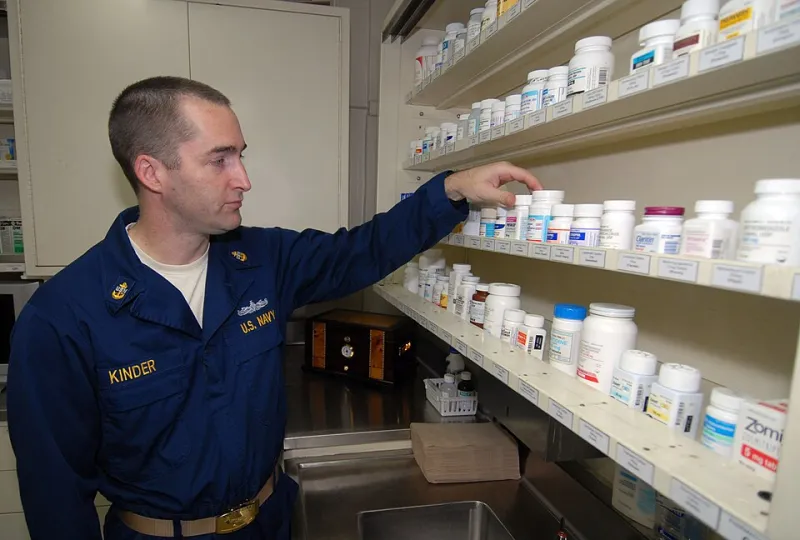
Photo: U.S. Navy photo By Mass Communication Specialist Seaman Christopher L. Clark, Public domain, via Wikimedia Commons
Imagine this scenario: A 58-year-old woman in Ohio manages her anxiety with a prescription antidepressant. She reads that St. John's Wort is a natural mood support, picks up a bottle at her local health food store, and begins taking it daily without mentioning it to her doctor. Within weeks, she experiences intensified anxiety, restlessness, and a rapid heartbeat. What she doesn't know is that she may be experiencing serotonin syndrome—a potentially serious condition triggered by the combined serotonergic activity of her prescription and the supplement.
This scenario is not hypothetical. It plays out, in various forms, across the country every day. According to research published in peer-reviewed pharmacology journals, supplement-drug interactions are among the most underreported and underappreciated risks in American healthcare. The reason is straightforward: most patients do not think of supplements as drugs, and many healthcare providers do not ask about them.
At UPharm U, we believe that informed patients are safer patients. That begins with understanding exactly what can happen when supplements and prescription medications share the same body.
Why Supplements Are Not Automatically Safe Because They're Natural
The word "natural" carries significant cultural weight in the United States. It implies gentleness, harmlessness, and compatibility with the human body. But from a pharmacological standpoint, natural origin is not a reliable indicator of safety—particularly when other bioactive compounds are present.
Dietary supplements are regulated under the Dietary Supplement Health and Education Act (DSHEA) of 1994, which places them in a fundamentally different regulatory category than prescription or over-the-counter drugs. Manufacturers are not required to prove safety or efficacy before bringing a supplement to market. The FDA can take action after the fact if a supplement is found to be harmful, but pre-market scrutiny is limited.
This means that supplements can contain biologically active compounds capable of affecting enzyme activity, receptor binding, absorption rates, and metabolic pathways—all of which can alter how prescription medications behave in the body.
The Mechanisms Behind Supplement-Drug Interactions
To understand why interactions occur, it helps to understand two primary mechanisms.
Pharmacokinetic interactions affect how a drug is absorbed, distributed, metabolized, or eliminated. The liver's cytochrome P450 (CYP450) enzyme system is the most common site of these interactions. Many supplements either inhibit or induce these enzymes, which changes how quickly the body processes certain medications.
- St. John's Wort is one of the most potent known inducers of CYP3A4, an enzyme responsible for metabolizing a wide range of drugs including certain antiretrovirals, immunosuppressants, oral contraceptives, and antidepressants. By speeding up drug metabolism, it can reduce medication blood levels to the point of therapeutic failure.
- Grapefruit juice, though technically a food rather than a supplement, operates through a similar mechanism—inhibiting CYP3A4 and causing some drugs to accumulate to potentially toxic levels. The principle illustrates how broadly this interaction pathway applies.
Pharmacodynamic interactions occur when a supplement and a drug produce overlapping or opposing effects, regardless of metabolism.
- Fish oil and omega-3 supplements have antiplatelet properties. When taken alongside blood-thinning medications such as warfarin or aspirin, they may amplify the anticoagulant effect and increase bleeding risk.
- Valerian root and kava, both marketed for relaxation and sleep support, can enhance the sedative effects of benzodiazepines, opioids, or other central nervous system depressants.
- High-dose Vitamin E has been associated with increased bleeding risk, particularly in patients already on anticoagulant therapy.
Specific Supplements and the Prescriptions They Affect Most
The following pairings represent some of the most clinically significant interactions documented in pharmacological literature. This is not an exhaustive list, but it reflects combinations that are common in the American supplement and prescription landscape.
| Supplement | Affected Medications | Potential Concern |
|---|---|---|
| St. John's Wort | Antidepressants (SSRIs), oral contraceptives, HIV medications, warfarin | Reduced drug efficacy; serotonin syndrome risk |
| Fish Oil / Omega-3s | Warfarin, aspirin, clopidogrel | Increased bleeding risk |
| Vitamin D (high dose) | Thiazide diuretics, digoxin | Hypercalcemia risk |
| Magnesium | Certain antibiotics (fluoroquinolones, tetracyclines), bisphosphonates | Reduced antibiotic absorption |
| Echinacea | Immunosuppressants, certain liver-metabolized drugs | Immune stimulation may counteract immunosuppressive therapy |
| Coenzyme Q10 (CoQ10) | Warfarin | May reduce anticoagulant effectiveness |
| Garlic supplements | Warfarin, antiplatelet drugs, HIV protease inhibitors | Bleeding risk; reduced drug levels |
Vitamin D deserves particular attention because it is one of the most widely taken supplements in the United States, often self-prescribed based on general wellness messaging. While Vitamin D supplementation is appropriate and beneficial in many cases, very high doses combined with thiazide diuretics (commonly used for blood pressure) can lead to elevated calcium levels in the blood—a condition that, if left unaddressed, can affect kidney function and heart rhythm.
A Practical Framework for Tracking What You're Taking
The solution to supplement-drug interactions is not to abandon supplements wholesale. It is to manage your full health picture with the same intentionality you would apply to any medical regimen. The following framework can help.
1. Build a complete medication and supplement list. Write down every prescription drug, over-the-counter medication, vitamin, mineral, herbal product, and protein supplement you take—including dosage and frequency. Update this list whenever anything changes. Keep a copy in your wallet or stored digitally for easy access during medical appointments.
2. Bring the list to every healthcare encounter. This includes primary care visits, specialist appointments, urgent care visits, and pharmacy consultations. Do not assume your providers share records or that your electronic health record is complete. Proactive disclosure is your responsibility—and it is one of the most protective things you can do for yourself.
3. Ask your pharmacist to review for interactions. Pharmacists are specifically trained in drug and supplement interaction assessment. Many pharmacy software systems flag known drug-drug interactions, but they can only flag what is entered. When you provide a complete supplement list, your pharmacist can conduct a more thorough review.
4. Research before you start something new. Before adding a new supplement, check a reputable interaction database—such as the National Institutes of Health's Office of Dietary Supplements resource center or your pharmacist—particularly if you take any prescription medications.
5. Report new symptoms promptly. If you begin a new supplement and notice unexpected changes in how you feel—new fatigue, unusual bleeding, mood changes, altered medication effectiveness—contact your healthcare provider. Do not assume the supplement is unrelated.
Having Smarter Conversations With Your Healthcare Team
Many patients hesitate to mention supplements to their doctors out of concern that they will be dismissed or discouraged. This hesitation is counterproductive to your safety. A good healthcare provider will not judge your supplement choices—they will help you use them wisely.
Frame the conversation directly: "I want to make sure you have a complete picture of everything I'm taking, including supplements. Can we review this list together?"
If your provider does not ask about supplements, raise it yourself. If you feel your concerns are being dismissed without adequate explanation, seek a second opinion or consult a clinical pharmacist who specializes in medication management.
The Informed Patient Advantage
The supplements you take are part of your health story. They belong in the same conversation as your prescriptions, your diagnoses, and your treatment goals. The separation between "medications" and "supplements" is largely a cultural and regulatory distinction—biologically, your body processes all of these compounds through the same systems.
At UPharm U, our commitment is to give you the information you need to navigate that complexity with confidence. Transparency with your healthcare team is not a bureaucratic formality. It is one of the most direct and powerful ways to protect your health.